
The recent launch of Bajaj RE60, the four wheeler from Bajaj Auto, points in one direction – in India, the low cost car segment still seems lucrative. It would have been much easier to accept that low cost cars are not for India after the much hyped Tata Nano failed to perform. However, the fact that nearly 40-45% of the Indian market falls in the below INR 4 lakh car segment is too big to ignore. So the big question is – How should one target this segment with an entry level car?
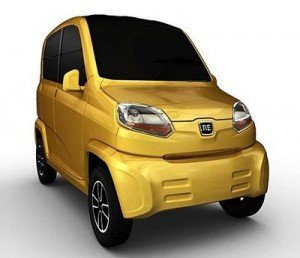
When Ratan Tata shared his vision of a small affordable family car and delivered it, the marketing point was simply the Rs. 100000 price point. While it may seem a great way to target customers by opting for a penetration pricing and trying to convert the two-wheeler consumer to four wheeler- controversy over the original plant site in Singur, coupled with general perception that a cheap car won’t be able to last on Indian markets ensured that that Nano underperformed from its expectations. To make matters worse, rising input costs ensured that the Nano now retails at more than INR 1.5 lacs. Bajaj has been careful in avoiding the low price strategy by adopting an initial price tag of INR 2 lacs- making it a competitor to Maruti variants like Alto rather than the two-wheeler segment- clearly, a smart move !
The Bajaj RE60 was originally intended to be developed as a low cost car in collaboration with Renault-Nissan as a challenger to Nano. However Bajaj fell out with Nissan during the course of time and finally had to deliver the car on its own. The new car RE60 was developed indigenously in-house by Bajaj CTO Mr. A. Joseph, who heads the R&D division, and his team.
The sub-2 lac price segment of four wheelers is bound to see a lot of action in coming days particularly as Renault is also developing a low cost car of its own that will also cater to this segment. An improved version of Tata Nano, named as Tata Pixel, has also been announced and displayed targeting the European markets along with the diesel version of Nano that is scheduled to be on Indian market as early as 2013. Chinese automobile manufacturer Geely has also shown an interest in developing a low-priced small car for Asian markets.
Furthermore, there is also a booming market for cars in this segment in the African and Latin American countries- which makes the pie look extremely attractive. However, given the less than average performance of Nano, a lot remains to be seen whether Bajaj can deliver. Bajaj has an advantage as it can use its existing 2-wheeler and 3-wheeler distribution chain in Africa to market its car, an advantage that Tata Nano lacked. With the launch of RE60, Bajaj will increasingly intend to move up the value chain by offering more products depending on the success of this variant- let’s hope it succeeds and consumers get more choices in this price segment.
Food for thought: Do you feel Bajaj should have continued to focus on its core competency and avoided entering the four-wheeler segment ?
You might like reading:

Decoding Treasury Inflation Protected Securities – Are they effective?
Inflation has always been a worry and threat to every long-term investors. Any investment which is inflation-protected can protect investors from the loss of purchasing power that inflation can cause. In 1997, US first issued inflation-protected securities called Treasury Inflation-Protected Securities, or TIPS. TIPS are sometimes also known as Treasury Inflation-Indexed Securities. Credit risk and nominal interest risks are the […]

HULT PRIZE AT XIM 2022
The Xavier Institute of Management, Bhubaneswar (XIMB) will host the prestigious Hult Prize for the second time in its campus on February 27th 2022. The Hult Prize Case Competition is scheduled to run from 2nd January 2022 through 27th February 2022. The HULT Prize Case Competition is a worldwide student competition in partnership with the United Nations that challenges university […]