
“Cigarette smoking is injurious to health”- The tag line is quite common on any cigarette pack being sold in India. To add to it, the packet also bears an image that should scare most smokers. However, the question is has it actually succeeded? Incidentally India remains the second largest producer of tobacco in the world, accounting for nearly 8.5% of world’s production (next only to China) and has 0.25% of its cultivable land for tobacco cultivation.
The total cigarette industry in India is estimated at around INR 25000 crores- the major players being ITC (which has nearly 60% market share), Godfrey Philips, VST and GTC. Around 12% of this production is exported. Interestingly, though the cigarette industry accounts only 17% of the total tobacco produced in India and the major bulk of tobacco is used for bidis, the packets of which do not bear any warning message! DAVP, the Govt. of India’s advertising arm, recently got into a controversy when it used footballer John Terry’s image on its cigarette ad. The footballers reps are apparently considering suing the agency. Advertisements are by far a fantastic medium to reach the customers or create awareness, but then why does cigarette consumption keep increasing? Does advertising benefits does not apply in this segment?
If we consider the age when an individual actually starts smoking it is generally in the age group of 15-20, a period when we are normally at our rebellious peak and can easily be driven by peer pressure. The awareness ads always tend to sound preachy and preaching always backfires. Perhaps the need is to go for a more creative approach like the “This is your brain on drugs” campaign of the 1990s. Furthermore, this needs to be backed with affirmative action like former health minister Mr. Ramadoss who initiated an anti smoking drive in 2008 and also introduced GHWs on cigarette packets and banned smoking in public places. He even went a step further by trying to ban smoking in even movies.
If we look at the scene overseas, there are some interesting scenarios when it comes to cigarettes. Australia implemented GHW in 2006 and any form of promotion is banned. Brazil is the second country in the world to implement GHW in 2008 and the first in latin America. In EU on the other hand, sales reportedly went up and people used funny stickers like “You could be hit by a bus tomorrow” to hide the warnings. In US, five tobacco companies sued the FDA as violation of free speech and the court put a stay on the new labels !
For campaigns like this to be successful one needs to appeal to the emotions. Furthermore, celebrity endorsements always help, but considering the money power and influence of companies like ITC- such initiative from either film stars, cricketers or the government looks highly unlikely. Till then, let us hope better sense prevails and smokers consider the cost that they actually pay.
You might like reading:
Opinion: BRICS vs MIKT – the race has just begun!
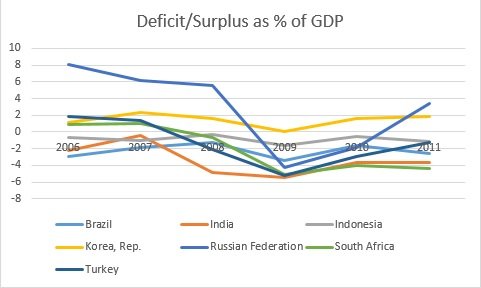
The term BRIC (Brazil Russia India China) was coined by Jim O Neil to signify the impact that these four countries will have on the world economy. BRIC today has expanded itself to become BRICS with the inclusion of South Africa and is widely regarded as a trading block that will dictate terms of world economic growth in the 21st […]
Chalk out a strategy which is personalized, Prabhat Chawla, NMIMS Mumbai 2016-18
Interview with Prabhat Chawla NMIMS Final Rank : Core 425, HR 62 Firstly, congratulations on your converting the call to NMIMS. Our readers would like to hear something about your background? Thank you IdeasMakeMarket.com. Talking about my background, I did my schooling from DL DAV Model School, Delhi and completed my B.Tech(CSE) from GGSIPU, Delhi. After graduating with a Computer […]